


Sheikh Hamad Award in Japan: Building New Bridges for Arabic–Japanese Cultural Exchange
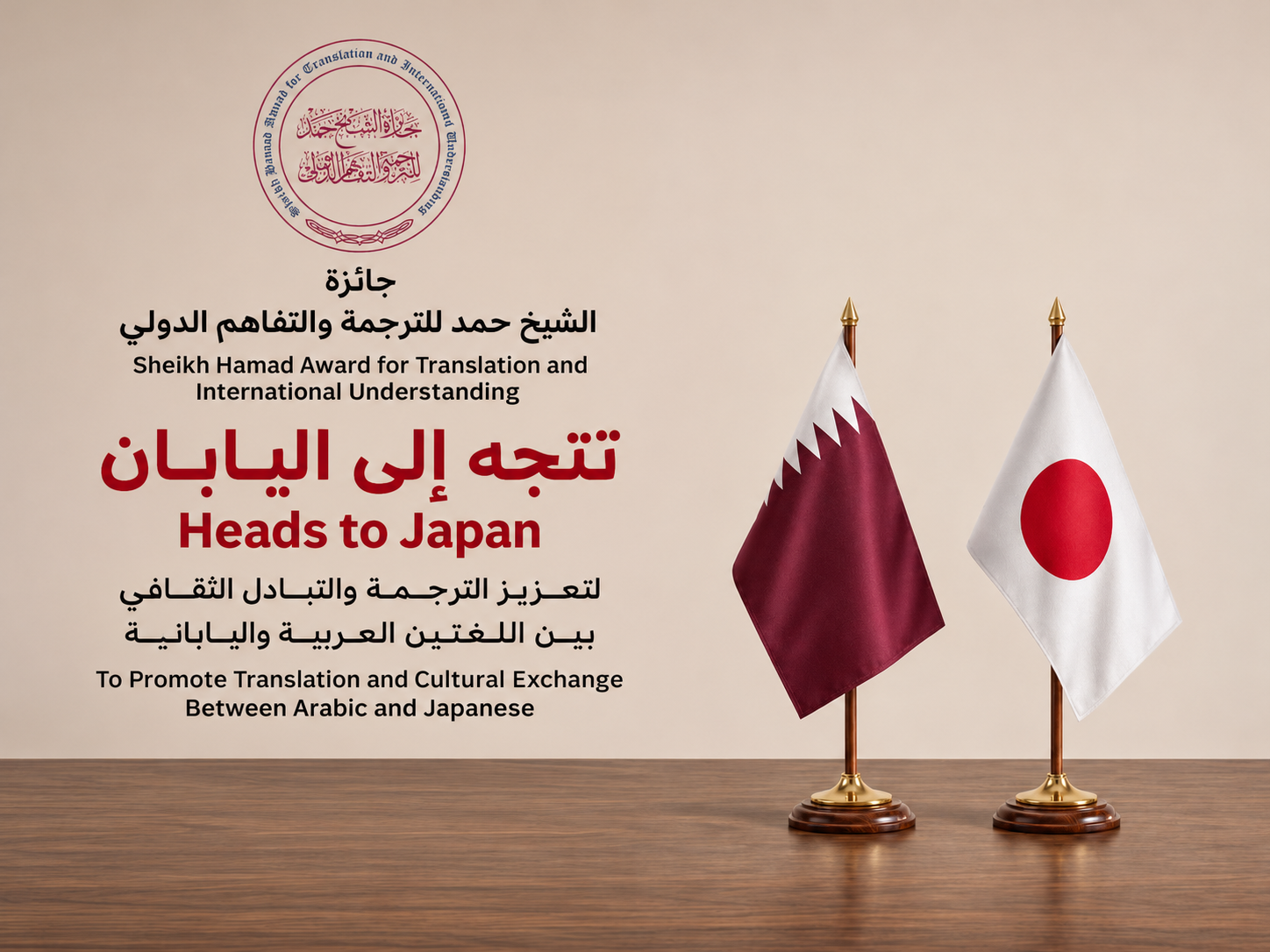

High-Level Delegation Visits Tokyo and Osaka to Strengthen Cooperation with Academic and Cultural Institutions and Encourage Translation Between the Two Languages
A delegation headed by Dr Mohammed Al-Ahmari, Director General of the Sheikh Hamad Award for Translation and International Understanding, is visiting Japan from 7 to 15 November 2026 as part of preparations for the Award’s 13th edition in 2027, for which Japanese has been selected as one of the languages in the Achievement Category. The visit aims to strengthen cultural and academic ties between Japan and the Arab world, encourage translation between Arabic and Japanese, and expand opportunities for cooperation with Japanese institutions, researchers, translators and publishers.
The visit reflects the Award’s approach of engaging directly with academic, cultural and professional communities in countries where the languages selected for its various editions are spoken. It seeks to introduce the Award, its objectives and opportunities for participation, while exploring ways to strengthen cooperation with universities, cultural institutions, publishers, translators, researchers and others active in translation and cultural exchange.
Japanese has been selected for the second time, having first featured in the 2018 edition, when the prominent Japanese translator and scholar Dr Nobuaki Notohara was among the Award’s winners. Dr Notohara is known for his contributions to translating Arabic literature into Japanese and introducing Japanese readers to Arab culture. The renewed selection of Japanese underscores the importance the Award attaches to advancing translation between Japanese and Arabic, supporting translators and institutions working in this field, and expanding networks of communication and cooperation between Arab and Japanese cultural and academic communities.
During its stay in Tokyo and Osaka, the delegation is scheduled to hold a series of meetings with universities and academic, cultural and research institutions, as well as publishers, translators, researchers and others interested in Arab–Japanese cultural relations. The itinerary includes visits to several leading Japanese universities, including Keio University, Waseda University, the University of Tokyo, Tokyo University of Foreign Studies and Osaka University. Other planned visits include the National Museum of Ethnology (Minpaku) and the Japan–Arab Friendship Association, alongside meetings with organisations involved in supporting translation, publishing and cultural exchange, such as the Japan Foundation.
These meetings aim to introduce the Award’s mission and participation procedures, gain insight into the current state of translation between Arabic and Japanese and the challenges facing the field, and hear directly from those working in it. They will also explore opportunities for cooperation that could increase the availability of Arabic books in Japanese translation and bring more works originally written in Japanese to Arabic-language readers.
The programme also includes meetings with Japanese media outlets to introduce the Award and its objectives, highlight the selection of Japanese among the languages for its upcoming edition, and emphasise the importance of translation and cultural exchange in fostering mutual understanding and closer ties between the peoples of Japan and the Arab world.
The Sheikh Hamad Award for Translation and International Understanding hopes that this visit will help build lasting relationships with Japanese institutions, translators, researchers and publishers, strengthen channels of cooperation and communication, and raise broader awareness of opportunities to participate in its forthcoming edition. The Award also seeks to encourage further translation initiatives and projects between Arabic and Japanese, supporting intellectual and cultural exchange and deepening mutual understanding between Japan and the Arab world.